
7 Tips for Choosing a Printed Circuit Board Supplier

Choosing a printed circuit board supplier can shape a product’s reliability long after the first prototype leaves the bench. The right partner does more than meet a quoted price. It explains material choices, flags risks, and delivers boards that match the approved files. The wrong fit may show up later as warped panels, inconsistent solder masks, or missed production dates. Small details matter.

PCB design educator Eric Bogatin has emphasized the importance of treating interconnects as part of the electrical system, not as mere wiring. A useful takeaway for supplier selection is this: “A circuit board is part of the circuit.” That principle makes technical communication essential. A supplier should understand layer stackups, impedance requirements, copper weights, and tolerances—and explain them in plain language.

This guide offers seven practical checks for evaluating a supplier. Look at manufacturing capabilities, quality controls, certifications, engineering support, lead times, pricing, and communication. Ask how the supplier handles a design question before production begins. Request relevant examples, not just a polished capability sheet. A quick, specific answer about a tight-pitch component or a controlled-impedance layer can reveal more than a broad promise.

Price still counts. But it needs context. Compare like-for-like specifications, including materials, testing, and delivery terms. And remember that no checklist removes every risk. I would still verify claims, review sample documentation, and start with a manageable order. That extra care may feel slow. It can prevent a much more expensive surprise.
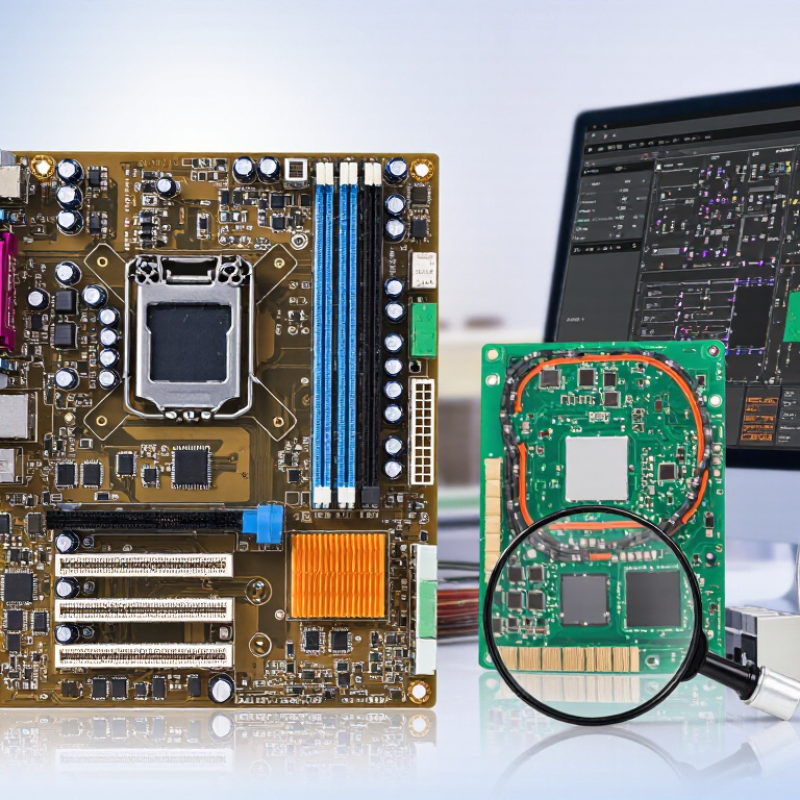
7 Tips for Choosing a Printed Circuit Board Supplier

Understanding the Role of a Printed Circuit Board Supplier

A printed circuit board supplier does more than turn files into copper and laminate. It translates design intent into a buildable, testable product. That work starts with checking stack-up details, copper weight, tolerances, and materials. A small mismatch can affect impedance or make a fine-pitch component difficult to assemble. The supplier’s engineering team should flag such risks early, not just quote the drawing. Ask how it handles design reviews, process changes, and first-article inspection.

Scale matters, but so does communication. Fortune Business Insights estimated the global PCB market at about $73.4 billion in 2023, reflecting a broad, complex manufacturing sector. That figure does not tell you whether one supplier can control your specific board. Request evidence: documented inspection procedures, traceable material records, and test results tied to your order. For a dense board, ask how impedance is measured and how defects are recorded. Specific answers beat polished promises.

A capable supplier also connects production planning with quality and delivery. Discuss lead-time assumptions, panel utilization, fabrication yield, and what happens when a specification changes. You may need to share forecast ranges, not only a purchase order. This helps the supplier plan materials and capacity, while giving you a clearer view of risk. Still, no process is perfect. A supplier can pass an audit and miss a communication detail; check responsiveness during a real technical exchange before relying on a long-term relationship.

Evaluating Technical Capabilities and Manufacturing Processes

Choosing a Printed Circuit Board Supplier: Evaluating Technical Capabilities and Manufacturing Processes

A capable supplier should translate your Gerber files into a controlled manufacturing plan. Ask for stack-up drawings, impedance calculations, drill tolerances, and material traceability. IPC’s 2024 technology roadmap highlights rising demand for HDI, finer lines, and more complex substrates. Capability matters.

Review the factory process, not only its sample boards. Check solder-mask registration, laser-drill control, copper thickness, and inner-layer alignment. Ask how operators manage temperature, humidity, and chemical concentration. Request recent microsection images and process-capability data. A supplier reporting Cpk values above 1.33 for critical dimensions shows stronger control, although one number never proves everything. Inspect AOI, flying-probe testing, electrical testing, and X-ray access. These details reveal whether defects are detected early.

Prismark’s 2024 industry data places global PCB sales above 70 billion US dollars, reflecting intense production pressure and supply-chain complexity. Larger output does not automatically mean better quality. Confirm compliance with IPC-6012 and IPC-A-600 requirements, then compare actual inspection records. A factory may promise tight impedance but lack calibrated test equipment. That is a warning. I once treated a clean prototype as proof of process control; it was not. Request a pilot run, review yield data, and examine corrective-action reports. The most reliable supplier can explain a failure without hiding it.

Verifying Quality Standards and Reliability

A reliable PCB supplier should prove quality before discussing price. Ask for current ISO 9001 certification, controlled process records, and clear acceptance criteria. The ISO Survey 2022 recorded over 1.26 million ISO 9001 certificates worldwide, yet certificates alone cannot reveal daily discipline.

Tip 1: Request the certificate scope. Tip 2: Check whether it covers PCB manufacturing. Tip 3: Review IPC-A-600 and IPC-6012 compliance. Ask for recent inspection images, not polished samples only.

Production scale also affects reliability. IPC’s 2023 World PCB Production Report placed Asia’s share near 90% of global PCB output. That concentration makes supplier audits, traceability, and communication essential.

Tip 4: Require lot-level material records. Tip 5: Confirm testing for continuity, insulation, and dimensional accuracy. Tip 6: Examine nonconformance reports and corrective actions. A supplier hiding defects is more dangerous than one reporting them. Small details matter.

During an evaluation, request a pilot batch with the same materials and equipment used for production. Measure warpage, hole quality, solderability, and delivery consistency.

Tip 7: Set measurable acceptance limits before ordering. Visit the facility when possible. Look for clean storage, labeled reels, calibrated instruments, and operators who can explain process controls.

My own mistake was trusting a flawless sample too quickly; production variation appeared later.
Reliability is demonstrated over repeated lots, not one impressive shipment.

Comparing Pricing, Lead Times, and Production Capacity

7 Tips for Choosing a Printed Circuit Board Supplier

Pricing, lead times, and production capacity should be compared together. A low quotation can hide tooling fees, testing charges, or expensive expedited freight. Prismark’s 2024 PCB Industry Forecast projected approximately 5% market growth during 2024, increasing pressure on factory schedules. Ask for a complete quotation, including materials, finishes, electrical testing, packaging, and engineering changes. Then request pricing at three volumes, such as 100, 1,000, and 10,000 boards. Real buying decisions need that spread. Request a written lead-time breakdown. It should separate engineering review, material purchasing, fabrication, testing, and shipping. “Four weeks” is not specific enough.

Production capacity deserves physical evidence. Ask about monthly layer capacity, drilling equipment, plating lines, and available shifts. A supplier may have impressive annual output but limited capacity for your board type. IPC’s 2024 electronics supply-chain research continued to identify planning uncertainty and uneven demand as major manufacturing concerns. Therefore, ask how capacity is reserved during demand spikes. Review recent on-time delivery data, not only promises. A useful target is the percentage of orders shipped on or before the confirmed date. Also inspect sample inspection reports, process-control records, and corrective-action history.

Small details matter. A clean board edge and consistent solder mask reveal process discipline. I have seen comparisons fail because buyers measured quoted days, not actual calendar days. That mistake is easy to repeat. Capacity claims should be tested with a pilot order before approving full production.

Assessing Communication, Support, and Long-Term Fit

7 Tips for Choosing a Printed Circuit Board Supplier

Tip 1: Test communication before placing a large order. Ask for a sample quotation, engineering review, and production timeline. Measure response speed, technical clarity, and ownership of mistakes. A vague reply today may become a costly delay later. Ask for evidence.

Tip 2: Examine support beyond sales. Confirm whether engineers review stack-ups, impedance requirements, material choices, and design-for-manufacturing risks. Request a clear escalation path for defects or schedule changes. IPC guidance emphasizes process control and documented quality practices in electronics manufacturing. McKinsey’s 2020 supply-chain survey found that 93% of leaders planned to increase resilience after major disruptions. Communication supports that resilience, but it does not replace verified processes.

Tip 3: Judge long-term fit through a controlled trial. Start with a small batch and compare first-pass yield, inspection records, corrective-action speed, and delivery consistency. Review how the supplier handles an imperfect file or a missed specification. A perfect scorecard is impossible. That is worth admitting. The stronger question is whether problems become visible early and receive accountable responses. Also check capacity planning, backup material sources, change-notification rules, and secure document handling. Industry surveys continue to identify supply continuity, quality, and responsiveness as major electronics-manufacturing concerns. Choose evidence over polished promises.

7 Tips for Choosing a Printed Circuit Board Supplier - Assessing Communication, Support, and Long-Term Fit

Tip What to assess Questions and evidence to request Practical evaluation signal
1. Check technical capability Confirm the supplier can build your board’s layer count, materials, dimensions, copper weights, and feature sizes. Provide the fabrication data and ask for a design-for-manufacturing review. Request written confirmation of any limits, assumptions, or required changes. A suitable supplier identifies specific manufacturability risks and clarifies them before quoting or starting production.
2. Verify quality controls Understand how the supplier controls processes, inspects boards, documents results, and handles nonconforming product. Ask which revision of the applicable specifications will govern the order. For rigid boards, IPC-6012 covers qualification and performance requirements; IPC-A-600 provides visual acceptability criteria. Request relevant inspection records or a sample inspection report. Requirements and acceptance criteria are agreed in writing. Ask whether testing, such as electrical testing, is included and what documentation accompanies shipment.
3. Evaluate communication Assess responsiveness, clarity, technical understanding, and whether communication continues after the quote. During a sample inquiry, note response time and whether answers address your questions. Ask who will manage technical queries, order updates, and escalations. Responses are specific, consistent, and easy to act on. Agree on communication channels and update frequency before placing an order.
4. Assess engineering support Determine whether engineers can review fabrication data, explain process constraints, and support issue resolution. Ask how they handle unclear notes, conflicting data, stack-up questions, and proposed substitutions. Confirm that no change will be made without the agreed approval process. The supplier documents questions and proposed changes, and obtains approval before implementing changes that affect form, fit, function, or requirements.
5. Compare lead time and delivery planning Review quoted production time, shipping time, order scheduling, and how delays are communicated. Ask when the quoted lead time starts, whether it includes engineering review and testing, and how schedule changes are reported. Compare quotes using the same quantity, specification, and delivery terms. The quote states its assumptions and milestones. Treat delivery dates as commitments to verify, not as comparable unless the scope and start point match.
6. Review traceability and change control Check how revisions, materials, production lots, and inspection records are identified and retained. Ask how the supplier prevents outdated files from being used, records approved revisions, and links production or test records to shipped lots. The supplier can explain its revision-control process and provide agreed documentation that lets you identify the applicable board revision and lot.
7. Consider long-term fit Evaluate capacity, repeat-order consistency, issue handling, business continuity, and fit with your expected demand. Discuss forecast changes, repeat-build controls, escalation contacts, corrective-action records, and contingency plans for material or capacity constraints. A strong long-term fit is supported by transparent capacity discussions, consistent documented processes, and a clear route for resolving problems.

Evaluation note: Confirm applicable standards, revisions, acceptance criteria, and documentation requirements in the purchase order or quality agreement. Certifications and capabilities should be verified directly with each supplier.