How to Master Circuit Board Design for Global Buyers?
In today's global marketplace, mastering circuit board design is crucial for success. A well-designed circuit board can significantly impact product performance. It influences everything from power consumption to reliability. Buyers around the world have increasing expectations for quality and precision.
To meet these demands, knowledge in circuit board design must extend beyond basic skills. Understanding materials, layout, and manufacturing processes is essential. Each decision in the design phase affects the final product's cost and functionality. Attention to detail and continuous learning are vital. Mistakes in design can be costly. Reflection on past projects often reveals areas for improvement.
Accessing industry resources and expert workshops can bolster your expertise. Collaborating with experienced professionals enhances your understanding of best practices. As technology evolves, staying updated will be an ongoing challenge. Embracing this challenge will prepare you to meet global buyers' standards. Your journey in circuit board design requires both dedication and adaptability.

Understanding the Basics of Circuit Board Design for Global Markets
Understanding the basics of circuit board design is essential for tapping into global markets. According to a recent industry report, the global market for printed circuit boards (PCBs) is expected to reach $100 billion by 2025. This growth opens avenues for designers and manufacturers alike but requires a firm grasp of technical principles.
One of the fundamental aspects of circuit board design is component placement. Proper placement reduces noise and optimizes performance. Designers must also consider impedance matching and thermal management. These factors often lead to trade-offs, such as size versus functionality. Inadequate attention to these details may result in performance issues, which can affect international competitiveness.
Moreover, the increasing complexity of circuit boards poses challenges. Multi-layer designs require a precise understanding of signal integrity and manufacturing capabilities. A report from IPC highlights that 30% of circuit board failures stem from design errors. This figure urges designers to adopt thorough testing and validation processes. Ultimately, mastering these basics will be crucial for success in the global market.
Essential Tools and Software for Effective Circuit Board Design
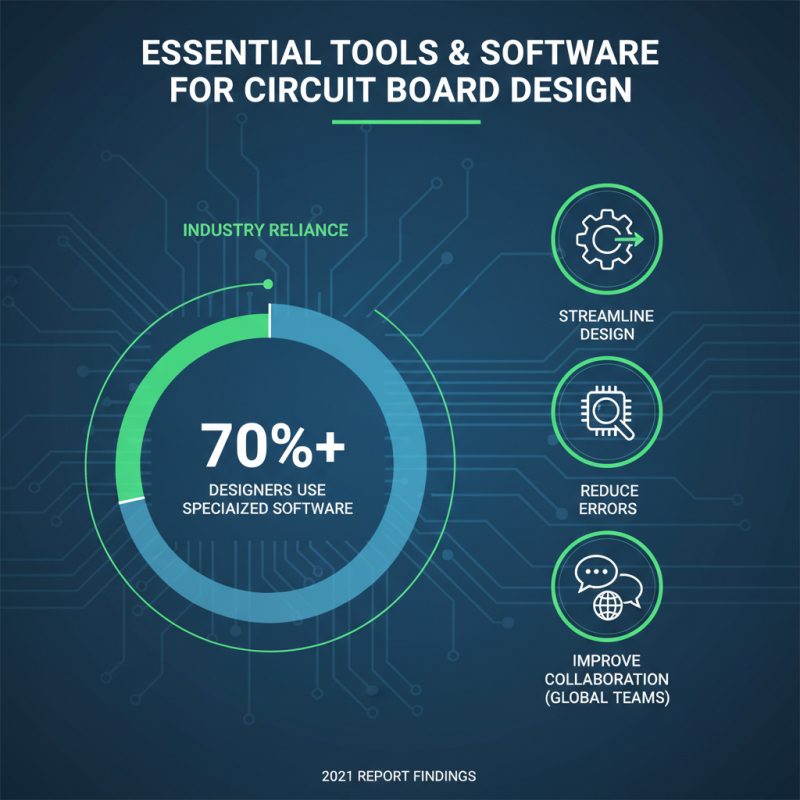
In circuit board design, choosing the right tools and software is crucial. A 2021 report found that over 70% of designers rely on specialized software for efficiency. These tools streamline the design process, reduce errors, and improve collaboration among global teams.
Popular software options typically offer features such as schematic capture, PCB layout, and simulation capabilities. Familiarizing yourself with these functionalities can significantly enhance your design quality. However, the learning curve can be steep. It is essential to invest time in mastering these tools.
Tip: Start with tutorials or online resources to build a solid foundation. Practice with simple projects before tackling more complex designs.
Additionally, consider the compatibility of your software with manufacturing processes. Many designers fail to ensure their designs align with manufacturing capabilities, leading to costly revisions. A reported 30% of projects encounter delays due to design-manufacturing mismatches. Always verify specifications with manufacturers early in the design phase.
Tip: Engage with forums or communities. Networking can provide insights and feedback, often revealing issues you may have overlooked in your design.
Key Design Considerations for International Compliance and Standards
When designing circuit boards for international markets, compliance with global standards is essential. These standards vary widely, necessitating a nuanced understanding of regulations such as RoHS or IEC. A recent report by the International Electrotechnical Commission found that compliance issues can cost companies up to 15% of their project budgets. Understanding these regulations can prevent costly redesigns.
Materials selection is critical for compliance. For example, lead-free solder is a necessity in many regions. However, it requires specific processing temperatures that may affect other components. Further, standards like UL safety ratings can impact the materials you select. The wrong choice can lead to failures and recalls, which could damage a company’s reputation significantly.
Designers should also consider the environmental impact of their products. The rise of eco-conscious consumers means that sustainability isn't just a trend; it's a requirement. Failing to address this can limit market access. In fact, a survey indicated that over 70% of buyers prefer eco-friendly options. Amidst these challenges, continuous education and adaptation are necessary for success in the evolving landscape of global circuit board design.
Best Practices for Collaborating with Global Suppliers and Manufacturers
Collaborating with global suppliers and manufacturers in circuit board design requires clear communication. This starts with understanding cultural differences. Each region has its own business etiquette, which can affect negotiations and project timelines. Taking time to learn these nuances can build strong relationships.
Another key aspect is setting precise expectations. When working with global partners, clearly define project milestones and deliverables. This reduces misunderstandings and aligns everyone involved. Keeping documentation organized and accessible is vital. It allows all parties to reference agreements and prevent potential disputes.
Regular feedback is essential for effective collaboration. Schedule frequent check-ins to discuss progress. This helps identify potential issues early. Don't hesitate to address shortcomings. Encouraging open dialogue can foster a positive environment for problem-solving. Acknowledging mistakes promotes trust and learning within the team. Balancing meticulous planning with flexibility is crucial for success in the global market.
Global Circuit Board Design Collaboration: Best Practices Overview
Innovative Trends in Circuit Board Design to Meet Global Demands
Innovative trends in circuit board design are rapidly evolving to meet global demands. The trend towards miniaturization is prominent. According to a report by Market Research Future, the PCB market is projected to reach USD 88 billion by 2025, driven by the rise of consumer electronics and automotive sectors. Designers must master complex layouts in confined spaces. This requires advanced software tools that can simulate different circuit behaviors.
Sustainability is another vital trend. There is increasing pressure to create eco-friendly boards. Research shows that up to 30% of electronic waste comes from discarded PCBs. Designers now prioritize recyclable materials and eco-conscious manufacturing practices. However, some traditionalists argue that these materials can compromise performance. Striking a balance between sustainability and functionality remains a challenge.
Adopting AI and machine learning technologies is shaping the future of circuit board design. These innovations can optimize production processes and enhance quality control. A study by the IEEE shows that 80% of engineers believe AI will significantly improve their design workflow. Despite these benefits, not all designers are comfortable with AI integrations. Many feel a disconnect with technology. As the industry evolves, these perceptions must be addressed to fully harness technological advancements.