What is an Industrial Ethernet Switch and How Does it Work?
In today’s industrial landscape, communication is vital. An Industrial Ethernet Switch plays a key role in ensuring fast and reliable connections between devices. These switches facilitate data exchange in factories, plants, and other industrial environments. They connect everything from machinery to sensors, forming the backbone of modern automation systems.
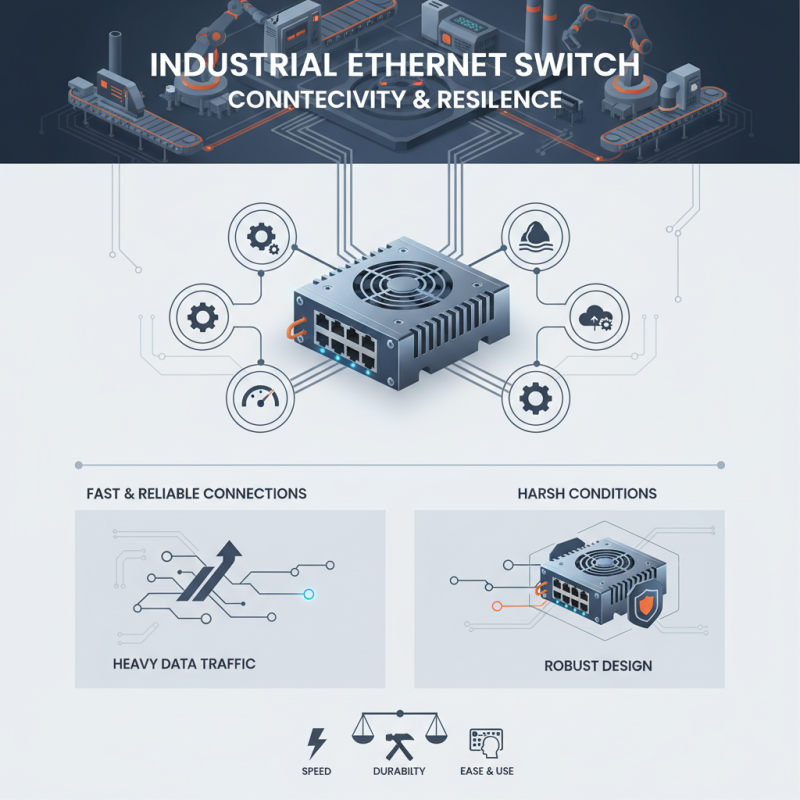
Understanding how an Industrial Ethernet Switch works can seem complex. These devices handle heavy data traffic and offer robust networking solutions. They are designed to withstand harsh conditions, unlike typical office switches. This reliability is crucial for maintaining operational efficiency. However, not all switches are created equal. Some may lack the necessary robustness or speed for specific applications.
Selecting the right Industrial Ethernet Switch requires careful consideration. While some models excel in performance, they might fall short on user interface or management features. Users often struggle to balance speed, durability, and ease of use. Reflecting on these factors is essential for optimizing network performance in demanding environments.
Definition and Purpose of Industrial Ethernet Switches
Industrial Ethernet switches are crucial for modern industrial networks. They facilitate reliable and high-speed communication between devices in harsh environments. These switches support real-time data transfer, making them essential for automation processes in manufacturing. According to a report by MarketsandMarkets, the Industrial Ethernet switch market is projected to reach USD 1.2 billion by 2026, highlighting the growing dependency on robust network solutions.
The primary purpose of industrial Ethernet switches is to connect various devices such as sensors, controllers, and computers while ensuring minimal data loss. Unlike standard Ethernet switches, industrial versions are built to withstand extreme temperatures, vibrations, and electromagnetic interference. Their rugged design enhances operational reliability in sectors like manufacturing and transportation.
Tip: When selecting an industrial Ethernet switch, consider environmental conditions. Ensuring compatibility with your operational setting can prevent unexpected failures.
Another essential feature of these switches is network redundancy. They often include protocols like Rapid Spanning Tree Protocol (RSTP) to ensure continuous connectivity. However, setting up redundancy can be complex, and misconfigurations may lead to communication downtime.
Tip: Regularly review network configurations and test redundancy setups to enhance reliability. Evaluating the performance of your industrial Ethernet switch can reveal potential vulnerabilities before they impact operations.
Key Features of Industrial Ethernet Switches
Industrial Ethernet switches are essential components in modern automation and networking. They connect various devices within an industrial setting. These switches ensure reliable communication among machines. Their robust design withstands harsh environments, such as extreme temperatures and vibrations.
One key feature of industrial Ethernet switches is their durability. Unlike standard switches, they can operate in challenging conditions. Many models have enclosures that resist dust and moisture. This makes them suitable for factories, warehouses, and outdoor installations. Additionally, they often include redundant power supplies. This feature guarantees continuous operation, even during power outages.
Another significant aspect is high-speed data transmission. Industrial Ethernet switches support multiple protocols, enabling seamless integration. This flexibility allows for various applications, from factory automation to smart grids. Many switches also offer advanced network management features. These include Quality of Service (QoS) and support for Virtual LANs (VLANs). Despite their advanced capabilities, configuring these switches can be challenging. Users must ensure proper settings for optimal performance. This requires both knowledge and experience.
How Industrial Ethernet Switches Function in a Network
Industrial Ethernet switches play a crucial role in the modern network infrastructure, especially in manufacturing and automation. They facilitate real-time communication between devices, enhancing operational efficiency. According to a recent report by MarketsandMarkets, the Industrial Ethernet switch market is expected to grow significantly, reaching USD 6.57 billion by 2023. This growth underscores their importance in ensuring reliability and speed in data transmission.
In a typical industrial network, Ethernet switches connect various devices such as sensors, controllers, and machines. These switches operate at Layer 2 of the OSI model, managing data traffic efficiently. Each switch can prioritize data packets, reducing congestion. For instance, critical real-time data can be prioritized over less urgent communication. This Delays can affect productivity, showing the need for careful planning in switch deployment.
Networking standards like EtherCAT or PROFINET often rely on these switches. They ensure synchronization and precise control within systems. However, integrating new technologies can be challenging. Networking professionals need to address latency issues and interoperability between older and newer devices. As industries evolve, understanding these challenges becomes imperative for seamless operation.
Industrial Ethernet Switch Performance Metrics
Common Applications of Industrial Ethernet Switches
Industrial Ethernet switches play a critical role in enhancing network communication within industrial settings. These switches facilitate data exchange between devices in real-time, allowing for efficient workflow management. According to a recent report by Market Research Future, the global industrial Ethernet switch market is projected to grow at a compound annual growth rate (CAGR) of around 15% from 2021 to 2027. This growth highlights their increasing demand in sectors such as manufacturing, energy, and transportation.
Common applications of industrial Ethernet switches include automation, machine control, and even remote monitoring. In manufacturing, these switches connect various devices, such as sensors and programmable logic controllers (PLCs), ensuring seamless operation. For instance, in the automotive industry, an industrial Ethernet switch can streamline communication between robotic assembly lines and central monitoring systems, down to milliseconds. However, challenges persist, such as ensuring cybersecurity and maintaining device compatibility amidst rapid technological advancements.
Additionally, the energy sector leverages industrial Ethernet switches for smart grid applications. They help integrate renewable energy sources with existing grids. However, as reported by Forbes, a significant percentage of companies face issues with interoperability and reliability when deploying these systems. As more devices get connected, the risk of network failures could increase, prompting a re-evaluation of current strategies. This reality calls for an ongoing discussion among industry professionals about best practices and emerging solutions.
What is an Industrial Ethernet Switch and How Does it Work? - Common Applications of Industrial Ethernet Switches
| Feature | Description |
| Port Count | Typically ranges from 5 to 48 ports, allowing a flexible network configuration. |
| Network Standards | Supports IEEE 802.3 standards such as Ethernet, Fast Ethernet, and Gigabit Ethernet. |
| Temperature Range | Designed for extreme environments, with operating temperatures ranging from -40°C to +75°C. |
| Redundancy Protocols | Supports protocols like Rapid Spanning Tree Protocol (RSTP) for network reliability. |
| Power Over Ethernet (PoE) | Can deliver power to devices such as IP cameras and wireless access points over Ethernet cables. |
| Management Type | Available in unmanaged, managed, and layer 3 switches, with varying levels of configuration options. |
| Common Applications | Used in manufacturing, transportation, energy, and other industrial sectors for reliable network connectivity. |
Comparing Industrial Ethernet Switches to Standard Ethernet Switches
Industrial Ethernet switches are crucial for connecting devices in factory settings. They differ significantly from standard Ethernet switches. Standard Ethernet switches are designed for office environments. They handle typical data traffic used by computers and printers. In contrast, industrial switches are ruggedized to withstand harsh conditions like extreme temperatures and moisture. They ensure reliable connections in demanding environments.
One notable difference is the speed and performance in data handling. Industrial switches often support real-time communication protocols. This enables machines to communicate without delay. This characteristic is vital for applications requiring immediate data exchange. Regular Ethernet switches may not offer the same capability due to their design focus on office networking.
When choosing an industrial Ethernet switch, consider its durability and protocol compatibility. Look for features that support faster data transmission. Ensuring proper cooling mechanisms is also important to maintain performance over time. Test your network under different conditions to assess its stability and reliability. Instant feedback on performance can identify potential issues early on.