
Choosing the best Singing Bowl begins with purpose, not appearance. Are you seeking meditation, gentle relaxation, sound practice, or professional therapeutic work? Each goal changes the useful criteria. A bowl may produce a deep, lingering tone, while another creates brighter overtones that feel sharper in a small room.
Market interest is growing, but evidence still needs careful interpretation. Grand View Research’s sound therapy market analysis forecasts continued expansion through 2030. However, the U.S. National Center for Complementary and Integrative Health notes that research on sound-based practices remains limited and varies in quality. A market forecast shows demand. It does not prove medical effectiveness. That distinction matters.
Peter Hess, founder of the Peter Hess Academy, has emphasized, “Sound is vibration, and vibration is life.” This idea explains why personal response matters when comparing bowls. Hold one near your chest. Strike it softly. Notice whether the vibration feels warm, distracting, or almost absent. Check the bowl’s diameter, weight, material, sustain, and playing method. Listen in the room where you will use it. Online recordings can misrepresent tone.
There is no perfect bowl for everyone. Handmade surfaces may contain small marks. That is not automatically a defect. Still, unclear alloy information, exaggerated healing claims, and missing return policies deserve caution. The best choice combines credible specifications with your own listening experience. Use this guide to compare sound, comfort, construction, and purpose before purchasing.
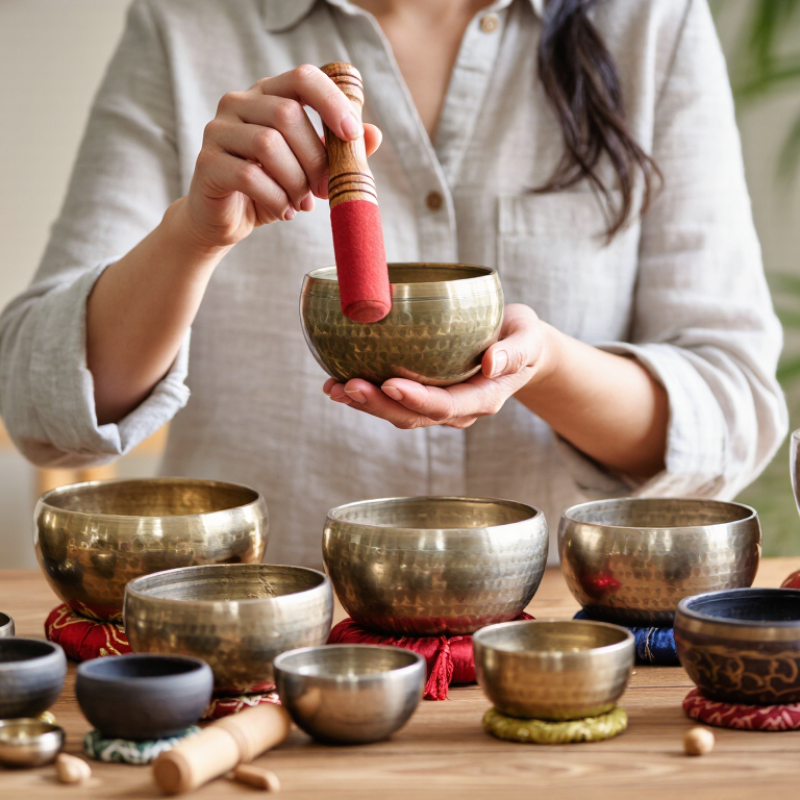
When choosing the best singing bowl, let your purpose guide the decision. For meditation, seek a bowl with a clear, sustained tone that does not feel harsh. Sit near it and listen before buying. Notice your breathing. If the sound helps you settle, it may suit your practice. A louder bowl is not automatically better.
For sound therapy, selection requires more care. A trained practitioner may consider tone, volume, room size, and the listener’s comfort. Ask how the bowl performs at different distances. Avoid claims that promise medical results. Sound can support relaxation, but it should not replace professional healthcare.
I once preferred a bright, powerful tone, yet it became tiring after ten minutes. That experience changed my judgment.
In yoga, portability and gentle volume often matter more than complexity. A medium bowl can work beside a mat without overwhelming quiet instruction. For ritual use, consider the tradition, setting, and meaning behind the practice. Respectful handling matters. Keep the bowl clean and store it securely. Test it in the room where you will use it, because walls can alter the resonance. Keep simple notes about tone, comfort, and duration. My own testing is still imperfect; mood affects what I hear. That uncertainty deserves attention.
A 4-inch singing bowl is compact, light, and easy to carry. Its pitch is usually higher, with a focused tone and shorter sustain. It can suit personal meditation, travel, or small spaces. A 6-inch bowl offers more body without becoming difficult to handle. Its resonance often feels balanced and responsive, especially for beginners. Size matters, but it does not tell the whole story.
An 8-inch bowl usually produces a warmer, fuller sound. It may hold vibration longer, making it useful for relaxation sessions or gentle sound work. Bowls from 9 to 12 inches create deeper pitches and broader resonance. They also need more storage space and physical control. Weight varies with wall thickness, shape, and metal composition. A thin 10-inch bowl may weigh less than expected.
When choosing, strike each bowl softly and note how long the tone remains audible. Then try a gentle circular motion with a suitable mallet. A clear tone should not feel harsh, unstable, or unusually weak. In my own testing, I once preferred a small bowl because it sounded bright in the shop. At home, its higher pitch felt tiring after several minutes. That mistake taught me to test resonance in a quiet room and from a short distance. Personal hearing, room size, and intended use can change the result. There is no perfect measurement. The best choice is the bowl whose weight, pitch, and resonance feel practical and comfortable for your routine.
A singing bowl’s material changes its voice, weight, and playing response. Traditional seven-metal bowls usually combine copper and tin with smaller amounts of other metals. However, no universal recipe defines “seven-metal.” Ask for an alloy analysis, not just a label. Bronze often produces warm overtones and a textured decay. Its rim may feel slightly rough under a suede mallet.
Quartz bowls advertised as 99.99% silica should include a material certificate. Purity does not guarantee better resonance. The U.S. Geological Survey reported about 107 million metric tons of U.S. industrial sand and gravel production in 2023, but ordinary silica feedstock is not the same as optical-grade fused quartz. That distinction matters. Quartz usually sounds brighter, cleaner, and longer. In a small room, that sustain can become piercing.
Try both materials before buying. Strike gently, then circle the rim slowly. Listen near the fundamental tone, beating patterns, and final decay. A calibrated audio analyzer can record frequency and sustain more reliably than a sales description. ASTM E1876 provides a recognized method for measuring elastic properties in solid materials, though it does not rate a bowl’s musical quality. The Global Wellness Institute valued the global wellness economy at 6.3 trillion dollars in 2023, showing strong demand for sensory practices, not proof of therapeutic effects. I once favored the clearest quartz tone, then found its long ring tiring after ten minutes. Comfort deserves more attention than purity claims.
A practical comparison of commonly available seven-metal alloy and high-purity quartz crystal singing bowls.
| Selection Dimension | Seven-Metal Alloy Bowl | 99.99% Silica Quartz Bowl | What the Difference Means | Best Match For |
|---|---|---|---|---|
| Material composition | Usually a copper-based alloy containing copper and tin, with smaller amounts of other metals. Exact recipes vary by maker and bowl. | Fused high-purity quartz containing approximately 99.99% silicon dioxide (SiO₂). | The alloy option has variable metallurgy, while quartz crystal offers a more standardized stated composition. | Alloy: buyers who value traditional metal construction. Quartz: buyers seeking a clearly specified material. |
| Typical sound character | Complex, warm, and layered tones; the result depends strongly on diameter, wall thickness, shape, and hammering. | Bright, clear, sustained tones with pronounced resonance; the sound can feel more focused and intense. | Neither material has one fixed sound. Bowl geometry and playing technique affect tone as much as composition. | Alloy: subtle, blended overtones. Quartz: clear, prominent resonance. |
| Sustain and resonance | ★★★★☆ Often provides a moderate-to-long sustain when properly shaped and struck. | ★★★★★ Commonly produces a long, ringing sustain, especially in larger bowls. | Quartz bowls can continue sounding for a long time, while alloy bowls may offer a more controlled decay. | Quartz: sound baths and immersive listening. Alloy: meditation with more tonal variation. |
| Pitch selection | Often available across a broad range of notes, but pitch consistency between individual bowls can vary. | Usually sold with a clearly identified fundamental note, although tuning accuracy still depends on manufacturing. | Check the actual bowl or a reliable tuning specification rather than choosing by diameter alone. | Quartz: buyers selecting a specific musical note. Alloy: buyers prioritizing character over exact pitch. |
| Physical durability | Generally resistant to ordinary handling and less likely to shatter if dropped, though it can dent or deform. | Hard and scratch-resistant, but brittle; a strong impact or sudden temperature change can cause cracking or breakage. | Metal is more forgiving in transport. Quartz requires careful storage, handling, and packing. | Alloy: frequent travel or group use. Quartz: stable indoor settings with careful handling. |
| Weight and portability | Often compact for its acoustic output, with weight varying by diameter and wall thickness. | Can be relatively heavy and bulky for its size, particularly in large frosted or thick-walled designs. | Compare the actual product weight, not only the bowl diameter. | Alloy: mobile practitioners. Quartz: stationary studios and dedicated practice rooms. |
| Playing technique | Can be struck with a mallet or played around the rim; rim rubbing usually requires a steady, controlled motion. | Commonly played with a rubber or suede-covered mallet; excessive force may produce harsh sound or damage. | Quartz generally benefits from gentler, more consistent contact. Alloy bowls tolerate a wider range of mallets. | Beginners: alloy for forgiveness. Experienced users: either material with the appropriate mallet. |
| Maintenance | Wipe with a soft, dry cloth. Moisture, salts, and acidic residues may accelerate surface tarnish. | Clean with a soft cloth and mild soap solution when needed; avoid abrasive cleaners and thermal shock. | Metal develops surface patina over time, while quartz usually retains a more uniform appearance if protected. | Alloy: users comfortable with natural patina. Quartz: users preferring simple visual upkeep. |
| Typical size range | Commonly available from small personal bowls of about 10 cm to large models exceeding 40 cm in diameter. | Commonly available from approximately 15 cm to more than 50 cm in diameter, depending on design and use. | Larger bowls generally produce lower tones and stronger acoustic projection, regardless of material. | Small sizes: personal practice. Large sizes: room-filling sessions and sound work. |
| Safety considerations | Check for sharp edges, loose decorative pieces, and possible sensitivity to metal alloys or surface treatments. | Inspect for chips and hairline cracks before every use. Do not use a damaged quartz bowl. | Material safety depends on construction quality and condition, not only on the label. | Anyone with metal sensitivity should verify composition; all users should inspect the bowl regularly. |
| Overall buying priority | Choose alloy for warmth, tactile feedback, portability, and impact resistance. | Choose quartz for clear sustained resonance, visible pitch labeling, and strong projection. | Listen to the actual bowl whenever possible; two bowls made from the same material may sound noticeably different. | Select the bowl that fits your room, handling habits, preferred sound, and budget. |
Note: “Seven-metal” is not a universal metallurgical standard, and alloy formulas vary. A 99.99% silica specification refers to the stated silicon-dioxide purity of the quartz material, not to a guaranteed pitch, therapeutic effect, or sound quality. Dimensions, weight, sustain, and tone should be confirmed from the individual bowl’s specifications.
Choosing a singing bowl starts with its purpose. Meditation bowls often suit warm, sustained tones, while sound work may require clearer pitch control. Hold the bowl near your ear and strike it gently with a soft mallet. Notice the initial note, lingering overtones, and vibration in your hands. A comfortable bowl matters more than appearance.
For reliable pitch checking, set a chromatic tuner to A4 = 440 Hz. Place the tuner close to the bowl, but avoid touching its microphone. Strike the rim consistently, then wait for the main note to settle. Compare the displayed pitch with the sound you hear. The reading may move because singing bowls produce several overtones. That movement is normal. A bowl labeled “C,” for example, may show nearby readings rather than one perfect note. I once trusted the first tuner reading and chose poorly. Listening longer would have helped.
Tips: Test the bowl in a quiet room. Record a short sample for later comparison. Check it at different volumes. Trust comfort, tone, and sustain together. Do not judge pitch from one strike. Temperature, striking angle, and mallet material can change the result. A tuner supports your decision, but your ears remain important. Even experienced players can disagree about the most pleasing bowl.
Choosing the best singing bowl requires more than liking its first note. Test it in a quiet room, then repeat the test near a wall. Room reflections can make a modest bowl sound unusually powerful.
Strike the rim gently with a wooden or leather mallet. Listen for sustain, not only volume. Measure the decay with a phone recording and compare the waveform after 10, 20, and 30 seconds. ISO 3382-1:2009 describes T20 and T30 decay measurements for room acoustics, which offers a useful testing framework. It is not a bowl-specific rule, but it encourages repeatable listening. Some bowls fade smoothly; others wobble, beat, or develop a sharp overtone. That variation may be beautiful or distracting.
Test at least two mallets. A hard mallet often emphasizes bright harmonics, while a soft one may produce warmer fundamentals. The fit matters: the handle should stay balanced, and the striking surface should contact the rim cleanly. My first test was flawed because I played every bowl too loudly. NIOSH’s occupational guidance uses 85 dBA over eight hours as a recommended exposure limit, so check sound output with a meter and protect your hearing during long sessions. Do not trust one shop recording. Move the bowl, change the mallet, and record your own evidence.
Use this neutral 1–5 evaluation framework when comparing bowls in person. Higher scores indicate longer sustain, clearer harmonics, a better-fitting mallet, and stronger sound output. Strike and play each bowl with the same technique, then select the profile that best matches your listening environment and playing style.
